


Why Alternatives Matter
The culture of capitalism runs deep in 21st century thought. Hierarchy, inequality, and competition are widely treated as unavoidable facts of life in any working economy. Even those harmed by these arrangements often accept them as necessary. Yet people constantly act against this supposed logic. Anthropological evidence overwhelmingly suggests cooperation and empathy have propelled human societies forward far more than competition and greed ever have. Cruelty and selfishness are certainly part of the human repertoire, but so are solidarity and mutual support. An economy rewarding the latter over the former could unlock levels of freedom and ingenuity capitalism simply cannot.
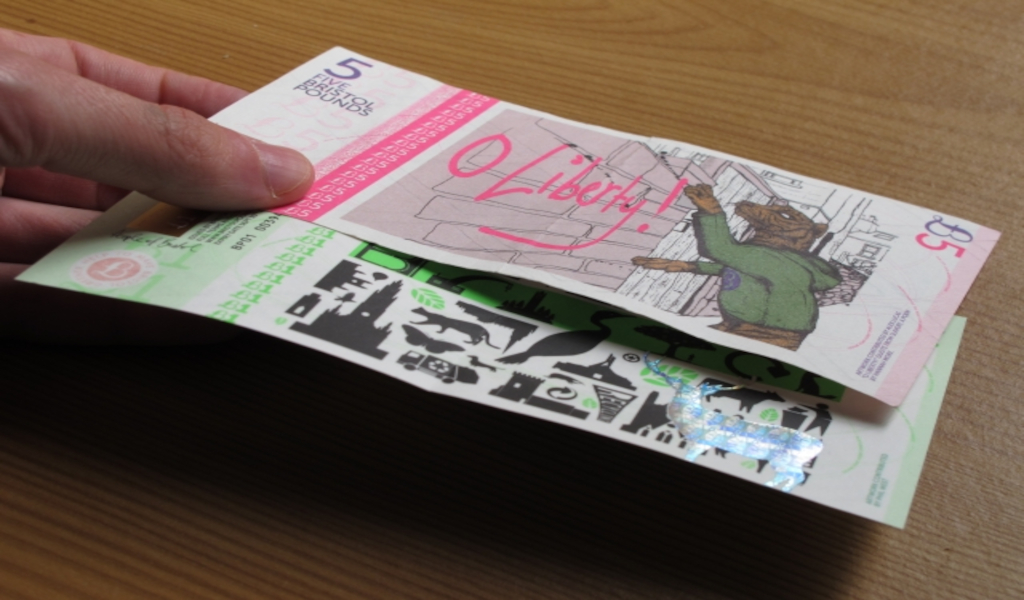
Local currency experiments are one visible expression of this cooperative capacity. They deserve serious attention both for what they achieve and for what they cannot achieve on their own.
A Brief Note on Participatory Economy
The participatory economy is a fully developed theoretical model for an economy managed democratically and equitably by its participants, rather than one driven by competition and fear. It offers concrete proposals for the fundamental questions any economy must answer: how work is remunerated, how production is organised, how investment is financed, and how goods and services are allocated.
It is not a blueprint or a silver bullet. It leaves plenty of room for communities and countries to shape their own institutions. What it does provide is a coherent vision against which we can measure existing experiments, including local currencies, to identify where they succeed, where they fall short, and how they might be extended.
How Local Currencies Work
Local currency systems come in several forms, but all attempt to correct specific failures of capitalist economies by adding a supplementary system of exchange.
In some systems, members hire one another and pay in units of a local currency. In others, there is no physical money at all, only a ledger recording credits and debits, which is increasingly easy to manage with digital tools. Many systems give new members a starting credit so they can immediately hire others without waiting to be hired themselves. In dual economy arrangements, local merchants agree to accept the currency as partial payment for goods, extending its usefulness beyond labour exchanges alone.
A widely used variant is the time bank, where labour is exchanged on an hour for hour basis. Other systems let buyers and sellers negotiate rates directly, and in some cases, these negotiations produce uniform pay rates shaped by supply and demand.
What Local Currencies Get Right
Local currencies address genuine problems in capitalist economies. The first is local recession and idle capacity. Regions often remain depressed even when the national economy recovers. Unemployed people who would gladly work, and local businesses starved of customers, could obviously benefit each other. Capitalist markets routinely fail to arrange these mutually beneficial deals. Local currencies attempt to jumpstart them by providing an alternative medium of exchange.
The second problem is unfair labour exchange. The participatory economy framework holds that exchanges of labour are just when they represent equal sacrifices. Pure labor time accounting often fails this standard because, for instance, it ignores environmental costs and the varying unpleasantness of different jobs. Crucially, a just system requires the decoupling of workers compensation from the charge for access to labour. In capitalist markets, the wage a worker receives is exactly the price the buyer pays. A participatory approach separates these. A worker receives compensation based purely on their effort and sacrifice. Meanwhile, the community or workplace is charged a separate fee for accessing that labor, calculated through participatory planning to reflect broader social costs, supply, and demand. Time banks, by treating an hour as an hour, are more equitable than capitalist labour markets to the extent that different kinds of work are similarly demanding. Even negotiated local exchanges, conducted face to face among community members, tend to be fairer than anonymous market transactions.
Beyond economic transactions, local currencies are powerful tools for community building. By encouraging direct face to face interactions, they pull people out of isolation and foster genuine relationships. These networks often evolve into hubs for democratic discussion about possible futures and decision making about the community . When neighbors gather to manage a time bank or a community ledger, they practice grassroots democracy. This shared responsibility builds trust and creates a strong foundation for larger cooperative projects, directly embodying the participatory economy ideal of community self governance.
Perhaps most importantly, local currency experiments concretely demonstrate that economic institutions are created by people and can be remade by them in their daily lives. They widen the collective sense of what is possible. Each experiment generates real world experience regarding how alternatives can coexist with, and eventually challenge, the dominant economy.
Where Local Currencies Hit Their Limits
While local currencies are valuable, enthusiasm should not obscure their structural limits. Their effect on employment is marginal. Alternative currencies can only nudge local employment figures. Broader tools such as public procurement, credit expansion, targeted tax measures, and active regional policies are far more effective. Local currency projects gain strength when tied to such policies rather than treated as substitutes for them.
They also have no answer to capital flight. As long as conventional banks operate normally, they will continue to gather deposits in poor communities and lend them out to businesses elsewhere. Local currencies cannot stop this drain. Countering it requires campaigns against redlining, community reinvestment requirements, and community development finance. In other words, it requires political and regulatory action instead of parallel money.
There is also a subtler risk. Where a local currency lets rates for different kinds of labour be set by supply and demand, the system quietly reproduces the injustices of the capitalist labour market. This highlights the sharpest critique from the participatory economy perspective. Fair remuneration requires deliberate, democratic agreements about the relative burdens of different kinds of work, supported by collective bargaining, wage solidarity, and an expanding commons. Crude price signals alone cannot deliver equitable results.
Toward a Democratically Planned Economy
Taken seriously, these limitations point beyond local currencies toward the broader project of a democratically planned economy. The participatory economy offers a framework for that next step. It proposes remuneration according to effort and sacrifice rather than market power, workplaces and consumer councils that make decisions democratically, and allocation procedures replacing both market competition and top down command with negotiated, participatory planning.
Local currency projects are valuable precisely because they begin to embody these values in practice through fairer labour exchange, community control, and cooperation over competition. Their limits are not reasons to abandon them but reasons to connect them with wider transformations, such as financial regulation, public investment, cooperative enterprise, and ultimately new institutions for democratic economic decision making.
Alongside this bigger picture, a few practical commitments matter:
- Financially impoverished participants should receive extra attention, benefits, and opportunities to take part, both as a matter of basic justice and to build committed, long term support.
- Networks of mutual support between different experiments are essential, since alternative initiatives are fragile and resource intensive in an aggressive capitalist environment.
- Activists should resist naive monetary theories and avoid overclaiming what a local currency can do, because clarity about the real scope of these tools protects them from later disillusionment.
Conclusion
Local currency experiments are important tools of and practical projects for economic democracy. They reduce local unemployment at the margins, make labour exchange fairer than capitalist markets allow, and most powerfully, expand the collective imagination about what an economy could be. Their limitations are real. They cannot stop capital flight, they cannot substitute for macroeconomic policy, and they can quietly reproduce market injustices if left unchecked.
Seen alongside the participatory economy, these projects are invaluable openings. They give a glimpse of participation and possibility, pointing toward the deeper systemic change of a democratically planned economy that the problems of our age increasingly demand.


I’am not sure. I don’t think transferable money should exist in post-capitalist society. The downsides are too big like for example silent transition to capitalism through the backdoor.